
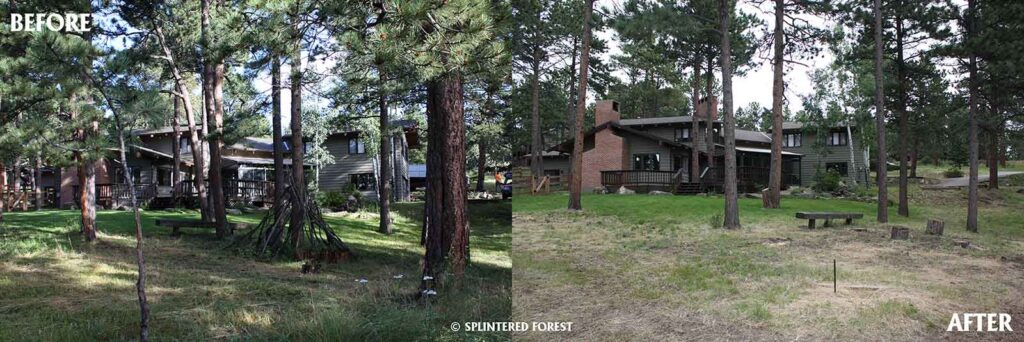
 BEFORE: There are numerous forms of ladder fuels that would escalate the intensity of a wildfire should one occur in close proximity to your home.
AFTER: Notice that the tall grasses have been cut to within 4” of the ground, dead and leaning trees have been removed, and stacks of dry wood have been moved outside of Zone 2- (100’ ft. from any structures.) Defensible space and tree removal services were provide for this home.
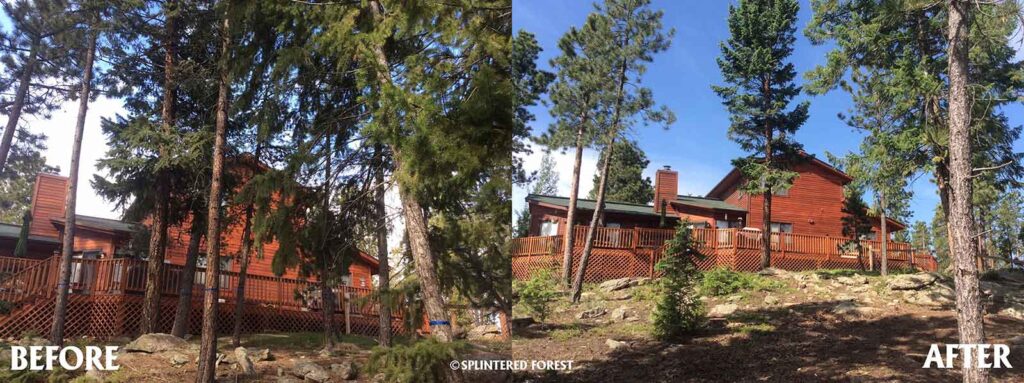 BEFORE: Notice the denseness of the upper tree canopy within Zones 1 and 2, the 10’ ft. canopy spacing requirement needs to be addressed.
AFTER: The required 10’ ft. of canopy spacing has been achieved by removing the blue flagged trees within Zones 1 and 2.
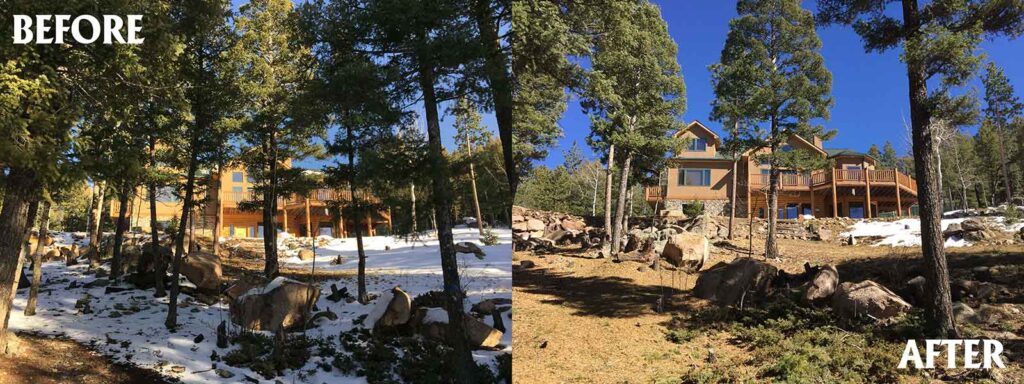 BEFORE: The close proximity of the tree canopy would allow a wildfire to quickly spread from tree to tree as it nears the house from the downhill side, eventually jumping onto the roof or deck.
AFTER: The 10’ ft. crown spacing has been achieved and the removal of trunk ladder fuels on the remaining trees will help to prevent a ground fire from moving laterally, into the upper canopies.
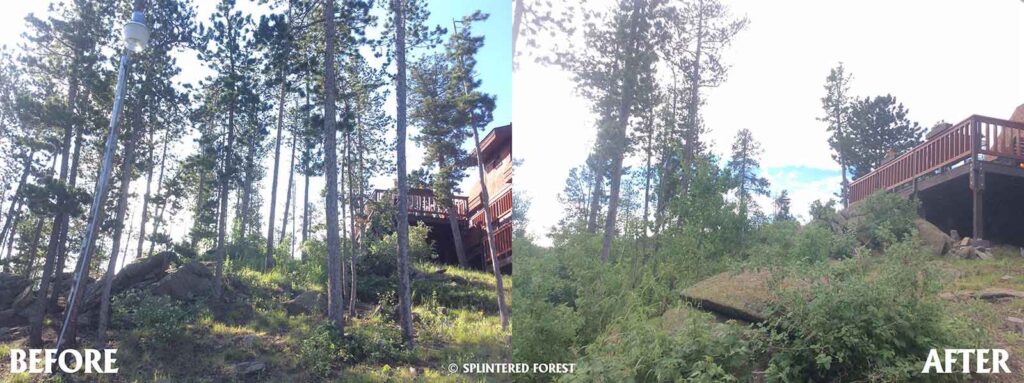 BEFORE: Lodgepole pine management within the Wildland-Urban Interface (WUI) is challenging in thick Lodgepole pine stands, early planning is critical and should be discussed and planned out with a certified forester.
AFTER: When thinning is required to improve your homes defensible space, leave clumps of Lodgepole pines, which are less susceptible to windthrow than individual trees, and allows the remaining groups of trees to grow healthier canopies and strengthen over time.
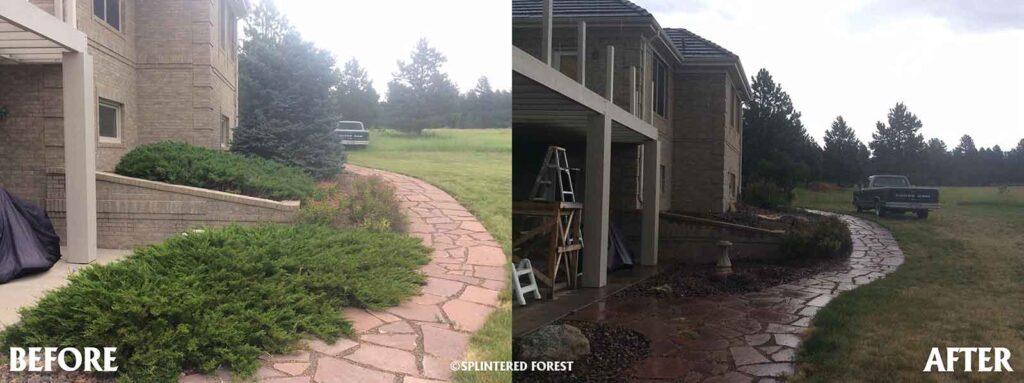 BEFORE: Junipers of all types are highly flammable. Continuous Juniper shrubbery grown in close proximity of your home is not recommended.
AFTER: Planting beds near the house have been cleared for the installation of a ‘Fire Resistant’ landscape, which could include; ornamental deciduous trees, and various species of Lilies, Sage, Geranium, native bunch grasses, and etc. Check with your local nursery for suggested fire resistant plant species for your area.
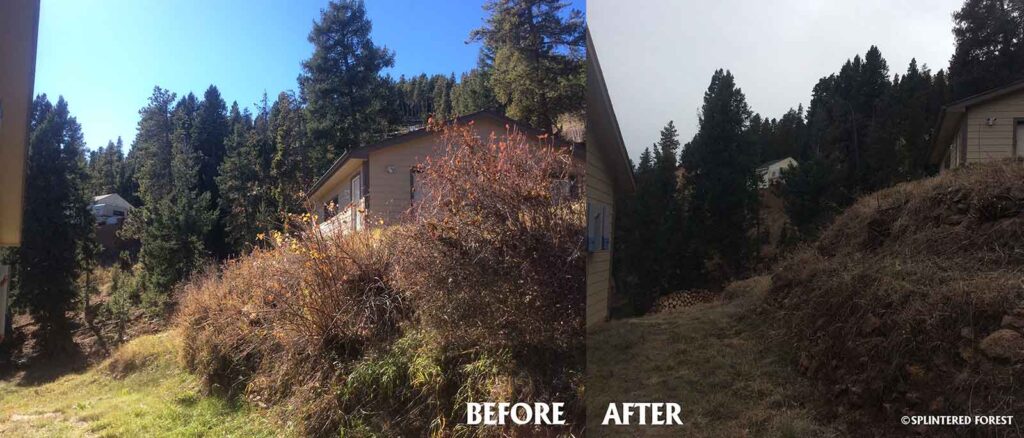 BEFORE: Large clumps of flammable shrubbery and ground cover near the house have been left unmaintained, creating ladder fuels downhill of the home.
AFTER: The ladder fuel shrubs have been pruned to form tight compact clumps, which reduces fire intensity and vertical height so flames can’t jump between plants and the house.
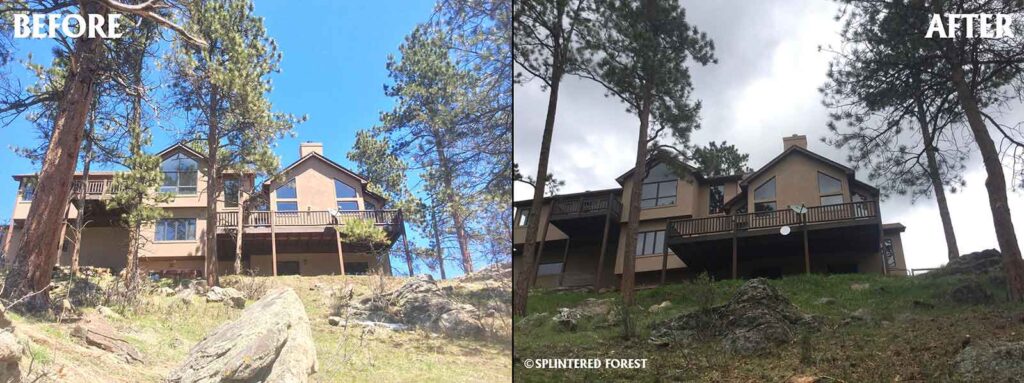 BEFORE: Trees growing under or near decks, and canopies growing over rooftops create ladder fuels that can allow flames to easily jump onto those same surfaces.
AFTER: The trees growing within 30’ ft. of the house have either been removed or pruned back at least 10’ feet from the home, roof or deck.
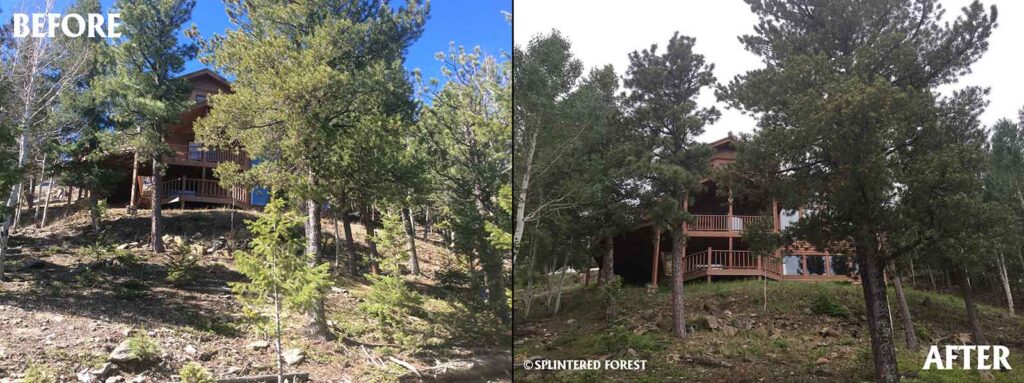 BEFORE: The shorter trees allowed to grow under the dripline of larger trees creates vertical continuity that allows a ground fire to jump and become a more intense crown fire.
AFTER: Notice that all smaller undergrowth trees have been removed and canopy spacing has been increased to lessen the potential spread of a crown fire.